The power of AI for data-driven insights at CHU UCL Namur
The power of AI for data-driven insights at CHU UCL Namur

:focal(undefined))
The power of AI for data-driven insights at CHU UCL Namur
In today's healthcare landscape, hospitals and health systems face an increasing volume of data, yet managing and extracting valuable insights from this data can be challenging. Leveraging Artificial Intelligence (AI) offers the potential to bridge this gap, making it easier for institutions to drive decisions and actions based on robust insights. A compelling example of AI's transformative power in healthcare data management comes from CHU UCL Namur, a Belgian hospital group, which has adopted Qlik Cloud’s AI capabilities to enhance patient outcomes and operational efficiencies.
Why CHU UCL Namur transitioned to AI-powered data analysis
CHU UCL Namur, a group formed by merging three hospitals (Dinant, Godinne, and Sainte-Elisabeth Namur), serves a large patient population with 936 approved beds, four polyclinics, five outpatient centers, two rest homes, and two nurseries. Faced with the need to make data more accessible and actionable, CHU UCL Namur transitioned to Qlik Cloud in December 2023 to leverage advanced AI tools such as AutoML and Insight Advisor.
For CHU UCL Namur, the decision to implement Qlik Cloud was twofold: first, to empower users to explore data independently and second, to make better use of their extensive datasets for predictive analysis. Moving from Qlik Sense to Qlik Cloud enabled the institution to benefit from features like alerting, notes, and an interactive glossary, which significantly improved user experience. This transition marked the beginning of a broader AI-driven strategy to help medical staff and administrators derive insights from data with minimal technical expertise.
The role of AI in enhancing patient care and operational efficiency
Qlik Cloud’s AI-driven features enable CHU UCL Namur to take a proactive approach to healthcare. For example, AutoML (Automated Machine Learning) enables users to create predictive models to forecast patient readmissions, determine likely diagnoses, or estimate the length of hospital stays. This capability empowers CHU UCL Namur to anticipate critical events and make informed decisions more rapidly.
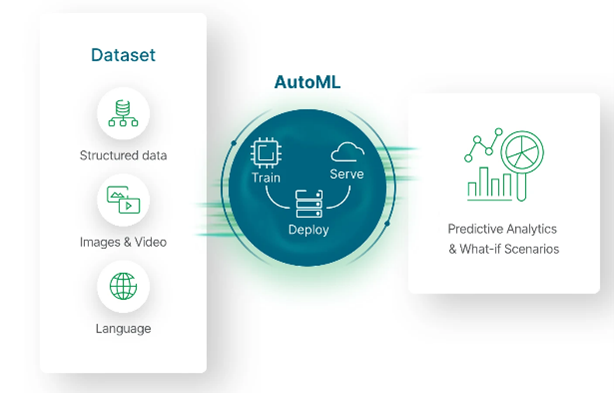 One significant advantage is the ability to run real-time predictions on patient data. With AutoML, the staff can quickly train and deploy models without requiring specialized data science skills. The predictive capabilities include:
Binary Classification: Predicting patient readmissions within a set timeframe.
Multi-class Classification: Determining probable diagnoses, such as identifying whether a patient may have the flu, pneumonia, or COVID-19.
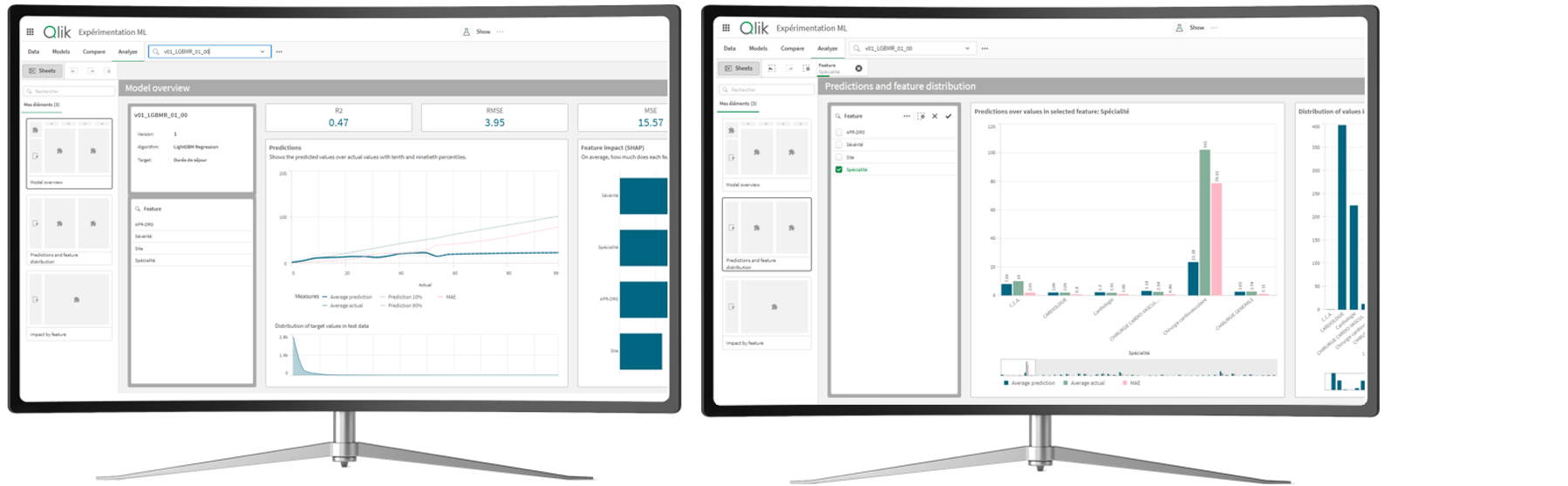
Regression Analysis: Estimating the length of a patient's hospital stay based on various factors.
Such predictive capabilities have allowed CHU UCL Namur to focus on preventive care, enhancing their capacity to manage patient flow, resource allocation, and overall patient experience.
Empowering healthcare staff with Insight Advisor
In addition to AutoML, CHU UCL Namur adopted Qlik Cloud’s Insight Advisor, a tool that enables staff to access data insights using natural language queries. For instance, doctors, nurses, and administrators can ask questions in plain language, like, “What was the average length of stay last month?” or “Which factors influence patient readmissions?” This feature makes it easy for staff members, whose primary focus is patient care, to obtain critical insights without extensive training or data navigation skills.
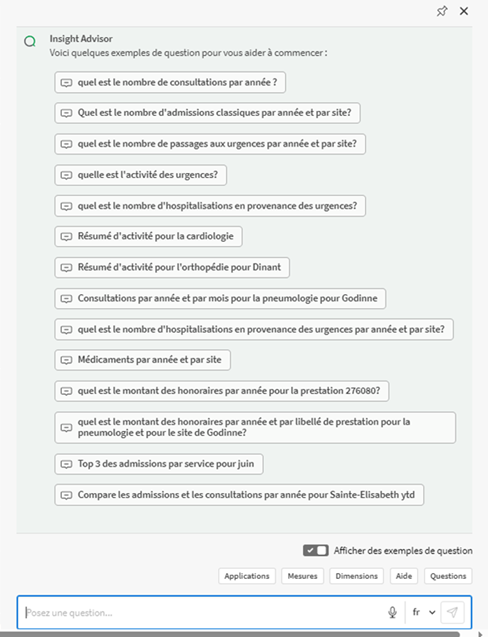
Insight Advisor’s natural language processing capabilities have been especially useful in promoting self-sufficiency among users. By reducing the need to contact the business intelligence team for data queries, healthcare staff can obtain information quickly, enabling them to make timely decisions in patient care and operations.
Key outcomes and future directions
With Qlik Cloud’s AI tools, CHU UCL Namur has positioned itself as a forward-thinking healthcare provider, embracing technology to improve patient care and streamline operations. By allowing staff to use AI for predictive analytics, the hospital has become better equipped to manage demand fluctuations, optimize resource utilization, and improve overall patient outcomes. The insights provided by AutoML and Insight Advisor help CHU UCL Namur continue developing a data-driven culture that prioritizes proactive, patient-centered care.
As CHU UCL Namur's journey with AI unfolds, the institution plans to further refine its predictive models and expand its use of AI for real-time, data-driven decision-making. The lessons learned from CHU UCL Namur's experience illustrate the broader potential of AI in healthcare, offering an inspiring example of how AI can help healthcare providers unlock the power of data to transform their operations and elevate the quality of patient care.

:focal(undefined))
Talk to us
Curious what your data can do for you? Let's connect: we take your data very serious!